WaltDisney.org Search

2187 search results found
Posted on

Released March 16, 1961, the film came in the middle of a record year for The Walt Disney Studios during which time Walt released three of the six highest-grossing films of the year—One Hundred and One Dalmatians (1961) came in at third while The Parent Trap (1961) came in sixth, just behind The Absent-Minded Professor—outgrossing notables like Breakfast at Tiffany’s (1961) starring Audrey Hepburn.

Nov 17, 2022–Mar 19, 2023

The Walt Disney Family Museum is pleased to announce its next community exhibition, Spirit of the Season: A Community Art Exhibition. Adult and teen artists are invited to submit artwork inspired by their own holiday traditions and expressing what the spirit of the season means to them.

Posted on

One Saturday morning in 1953, artist Herb Ryman sat down in front of Walt Disney and started to sketch. He had two full days to create a visual concept depicting an idea of Walt’s: an amusement park that would appeal to both children and adults.

Petrified
Posted on

What is the oldest attraction in Disneyland? At roughly 55 to 70 million years old, the petrified tree in Frontierland, an anniversary gift from Walt to Lillian Disney.

Spotlight On: John Canemaker
Posted on
Many Disney enthusiasts will need no introduction to John Canemaker, one of the world’s foremost animation historians, and an Academy Award®-winning animator in his own right. Intimately acquainted with the craft of making animated films, John has used his unique insights to write books exploring the lives and work of past masters in the field. His books have included Before the Animation Begins, which focuses on the top Disney concept artists; Paper Dreams, about the creative talents in the story department; and Walt Disney’s Nine Old Men and the Art of Animation, profiling some of the studio’s greatest animators.
Thumbs UP for The Parent Trap
Posted on
Our guest blogger, Jonas Rivera—an Academy Award-winning producer at PIXAR—shares his thoughts on the original film about twin sisters who were separated at birth, meet for the first time, swap places, and seek to reunite their parents.
Posted on

In late 1919, Walt Disney returned from his voluntary Red Cross service in post-World War I France. An independent eighteen-year-old, he’d resettled in Kansas City, Missouri and attempted to establish a career in illustration, graphic design, and cartooning. However, within a year’s time, a different art form caught his attention.

Posted on

When the Disneyland television show premiered in October 1954, it promised stories and programs from four distinct lands in the still-under-construction theme park: Fantasyland, Adventureland, Frontierland, and Tomorrowland. With no existing library of material to populate the Tomorrowland segments, Walt assigned a team, directed by veteran animator Ward Kimball, to develop “science-factual” programs about human space exploration, among other topics.

Snow White
Posted on

Of all the countless stories and anecdotes about Walt Disney, one of the most iconic and oft-recounted by those who knew him was of the fateful evening in the mid-1930s when Walt assembled his core group of artists in the sound stage at the Disney studio on Hyperion Avenue. There, without aid or introduction, Walt single-handedly performed the story of what would become Snow White and the Seven Dwarfs (1937).

Posted on

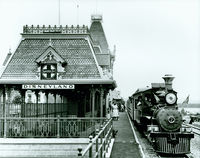
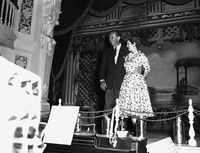
On July 13, 1955—four days before the grand opening of Disneyland—Walt and Lilly Disney were set to mark their 30th wedding anniversary. With showtime just around the corner, what better venue to host the celebrations than Walt’s new Park?

Posted on

In late May 1957, American television viewers gathered for another weekly installment of the Disneyland program. Entitled “The Liberty Story,” Walt Disney greeted viewers at a record player, played the song “The Liberty Tree,” and explained that “the liberties which we enjoy and take for granted didn’t just happen. They had to be won. … Behind our liberties there’s an interesting story…”

Posted on

“Ten years of fantasy, ten years of fun, ten years of growing, and we’ve only just begun…” In its first decade of operation, Disneyland Park welcomed nearly 50 million guests, its attractions and shows multiplied, and its creator entertained increasingly bigger plans. The Park’s 10th anniversary in 1965—dubbed the “Tencennial Celebration”—proved a significant turning point in its history, as Walt Disney made sure it would.

Posted on

The Walt Disney Family Museum’s collection of maquettes, or small character reference sculptures, spans various Disney animated feature productions including Pinocchio (1940), Fantasia (1940), and Peter Pan (1953). While most in our collection are painted plaster, there are a few exceptions—such as this The Ugly Duckling (1939) maquette—where surfaces have been left unpainted.

Posted on

One of the objects on display in The Walt Disney Family Museum is a miniature portraiture book of King Edward VII’s coronation to the English throne on August 9, 1902. Other members of the royal family featured in the miniature book include Queen Alexandra, the Prince of Wales (later known as King George IV) and his wife Mary, and their son Edward (later known as King Edward VIII).

Posted on

In 2019, The Walt Disney Family Museum was gifted one of two existing Mousegetars belonging to beloved head Mouseketeer Jimmie Dodd. Manufactured by Candelario Delgado of Candelas Guitar Shop, the custom-made tenor guitar was previously part of the Jimmie Dodd Archive housed at the California Institute of the Arts (CalArts) University in Valencia, CA.

Posted on

With the surrender of Japan in September 1945, four years of brutal conflict for the United States during World War II finally came to end. It was at this time that Walt Disney refocused his efforts. The studio lot had been requisitioned by the U.S. military shortly after the bombing of Pearl Harbor, and in the following four years, Walt devoted over 90 percent of The Walt Disney Studios’ output to the war effort.