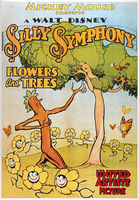
Although United Artists had more than doubled Disney’s budget, color was a risk that concerned them. Disney would not make its first color picture for the popular Mickey Mouse series, but rather the distinctive and often experimental series of stand-alone short subjects, the Silly Symphonies. Directed by Burt Gillett, the chosen short was a tale of plants and animals, Flowers and Trees (1932).
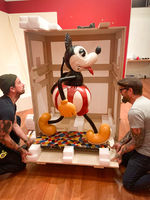
In February, The Walt Disney Family Museum closed the popular and beloved exhibition, Mickey Mouse: From Walt to the World. After its final close, the Collections and Exhibitions team began deinstalling the exhibition. When objects are slated for removal from an exhibition, they are carefully removed and either returned to their original storage location or sent back to their lender. With the unique Carousel Mickey—created by Henry De Vos circa 1930—there was more work needed to securely transport and store this unusual object.
Arguably, the highlight in The Walt Disney Family Museum Awards Lobby is Walt’s collection of 26 Academy Awards®, the largest collections of Oscars® outside of Hollywood. Of all of Walt’s Oscars®, one outweighs the rest, literally. This special honorary Academy Award consists of one standard Oscar® statuette standing above seven other miniature ones representing each of the Dwarfs.
Lodge at the Presidio
The Lodge at the Presidio is a sister property to the Inn at the Presidio which opened in 2012. The Lodge is an historic boutique hotel on the Main Post of the Presidio that’s been renovated into a comfortable and contemporary boutique hotel nestled in the heart of the Presidio. As San Francisco’s closest lodging to the Golden Gate Bridge, the modern rooms sport either views of the forest, the bay, the City, the bridge or a combination thereof.
Guests escape the bustle of downtown and enjoy nature and recreation in the park, while being steps away from excellent dining and shopping options.
Although Snow White (1937), Pinocchio (1940), and Bambi (1940) set the stage for Walt Disney’s landmark success in the 1930s, no one could have predicted that World War II, labor disputes, and an empty bank account would bring the prolific studio to the brink of closure. But, no one doubted Walt’s determination and his ability to find three more imaginative stories that would bring the studio back to life: Cinderella (1950), Alice in Wonderland (1951), and Peter Pan (1953).
Feb 2–Mar 5, 2023
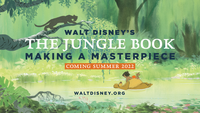
Walt Disney’s The Jungle Book: Making a Masterpiece explores the creative complexities behind the making of The Jungle Book (1967), including the use of cutting-edge animation techniques, the memorable soundtrack of original songs by the Sherman brothers and Terry Gilkyson, the impact of Walt’s passing during production, and the film’s enduring popularity and influence decades after its initial release.
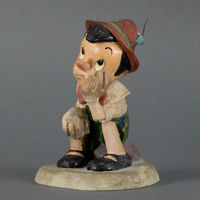
This Pinocchio character model sculpture, commonly referred to as a maquette, was created by The Walt Disney Studios Character Model Department during the production of Pinocchio (1940).
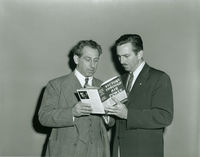
In 1942, Alexander P. de Seversky released his book Victory Through Air Power, in which he challenged the status quo of military doctrine with his argument that United States air power was weak, ineffective, and highly underdeveloped. He argued that military supremacy would be derived from air supremacy, and that the future of warfare rested on the development of a super fleet capable of strategic bombing or long-range air power. This, he argued, would be far more effective than tactical air power, in which aircraft only served in support of Navy or Army operations.
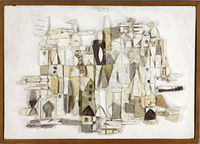
This incredible abstract façade of “it’s a small world” by Mary Blair from 1964—displayed in our 2014 exhibition, MAGIC, COLOR, FLAIR: the world of Mary Blair—was made with an interesting combination of techniques and materials. It was constructed of cast plaster with mosaic-like design elements, which give us an insight to the many processes that Mary Blair used in her artwork.
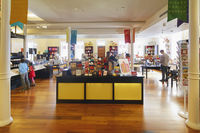
Missing Disneyland this holiday season? Deck the halls with some Disneyland goodies for the Park-lover in your life by shopping at The Walt Disney Family Museum Store this holiday season.
Flubber didn’t have to be realistic in the sense that it could actually be created—it just had to be believable.
“One reason the Christmas season appeals to me is that it makes us suspend business-as-usual routine and lets our minds soar for a while.” —Walt Disney
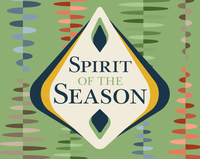
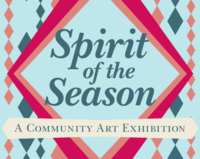
San Francisco, November 29, 2022—The Walt Disney Family Museum is pleased to present its second annual juried community art show, Spirit of the
It is with great sadness that we share the news that Disney Legend Alice Davis has passed away. To the world, Alice Estes Davis was best known for her work with Walt Disney as a costume designer. To the Board and staff at The Walt Disney Family Museum, Alice was an inspiring collaborator, kind-hearted benefactor, and cherished friend.
The Walt Disney Family Museum is honored to host Chris Miller: Kaleidoscope, a new exhibition of recent works by painter Chris Miller. The exhibition will be on display in the museum’s Lower Lobby and free to view from Thursday, November 17, 2022 through March 20, 2023.
The Walt Disney Family Museum is pleased to debut its first Cause Awareness exhibition, Creative Conservation: The Art of Endangered Animals. Presented in conjunction with Walt Disney’s The Jungle Book: Making a Masterpiece, this original exhibition features painted creations by rescued and...
“Conservation isn’t just the business of a few people. It’s a matter that concerns all of us. It’s a science whose principles are written in the oldest code in the world, the laws of nature. The natural resources of our vast continent are not inexhaustible. But if we will use our riches wisely, if...
The Walt Disney Family Museum is pleased to announce its next community exhibition, Spirit of the Season: A Community Art Exhibition. Adult and teen artists are invited to submit artwork inspired by their own holiday traditions and expressing what the spirit of the season means to them.
Indian Elephant
- https://www.worldwildlife.org/species/indian-elephant
- https://www.worldlandtrust.org/species/mammals/asian-elephant/
- https://www.pbs.org/wnet/nature/the-elephant-men-living-gods/2310/#:~:text=It%20is%20elephants'%20elevated%20standing,are%20sacred%20animals%20to%20Hindus.
- https://www.worldhistory.org/article/1241/elephants-in-ancient-indian-warfare/
The View-Master, a handheld stereoscope that allows for the viewing of three-dimensional photographs by clicking through reels, was introduced at the New York World’s Fair in 1939. William Gruber invented the View-Master system in conjunction with Harold Graves, the president of Sawyer’s Photographic Services. They capitalized on their license with The Walt Disney Studios to produce popular 3D reels and packets devoted to Disney’s animated characters, live-action feature films and television shows, and the newly opened Disneyland.
Joe Liptak, the creator of the majority of Disney’s View-Master 3D story sets for over 45 years, is revered for his exceptional artistry. The Walt Disney Studios provided Liptak with copies of production and story art, allowing him to maintain character integrity. Liptak had the ability to capture the characters’ on-model look, and he took great pride in never having any of his sculptures returned for revisions. Due to the meticulous care put into the sculpting of these delightful characters, Walt Disney’s story of The Jungle Book became a View-Master favorite.

San Francisco, April 20, 2022—The Walt Disney Family Museum is delighted to announce the opening of its next major special exhibition, Walt Disney’s The Jungle Book: Making a Masterpiece, in celebration of the beloved Disney animated classic’s 55th anniversary. Guest-curated by acclaimed animator