
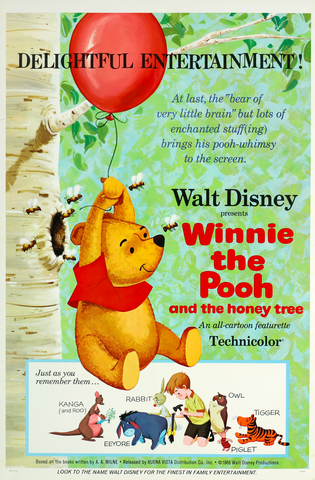
The last animated film released by The Walt Disney Studios during its namesake’s lifetime has arguably been one of its most enduring. 1966’s Winnie the Pooh and the Honey Tree was only a 26-minute featurette—based on A.A. Milne’s books, Winnie-the-Pooh and The House at Pooh Corner—in which a silly old bear goes in search of honey, pretends to be a cloud, eventually eats his fill of honey, becomes stuck in the entrance to his friend Rabbit’s home, and is then set free thanks to another friend, a boy named Christopher Robin. That initial release has since inspired dozens of subsequent Disney stories in both animation and live-action—all the more powerful considering how beautifully simple and elegant the Pooh stories truly are.
“We can feel like each of the Pooh characters at regular intervals throughout the day,” explains Stephen J. Anderson, who, along with Don Hall, directed the 2011 Disney animated feature, Winnie the Pooh. “We have our pessimistic times like Eeyore or we have times when we try to control everything like Rabbit. They’re so human. We see ourselves reflected back in them. And we can laugh with them. It doesn’t depress us about the human condition. It makes us feel good about it. What unites all of us are these human foibles and idiosyncrasies. We all share that.”
It was Walt Disney himself who seems to have developed an implicit understanding of the need to maintain an equally clear and loose structure for the narratives of Pooh and his friends in the Hundred Hundred-Acre Wood. There are no direct antagonists in a Pooh story, no action-infused set pieces or complex plot lines. Things just simply… happen. As story supervisor for the animated feature, animator, director, and Disney Legend Burny Mattinson would explain, “The [Winnie the Pooh] material itself is very delicate. You don’t want to make big guffaw laughs; it had to be done very gently and whimsically.”
“When you try to impose a three-act structure onto the Pooh characters, it just collapses because it’s not fun anymore,” adds Anderson. “There has to be some kind of objective with conflict, but it has to be simple enough that a young boy, Christopher Robin, can come in at the end and solve it. It has to be complicated enough to stump the characters but simple enough for the little boy to solve. And everything has to reset at the end. You don’t want traditional character arcs. You don’t want to see Pooh change his point of view. What would that even look like? Instead, it’s like a classic sitcom episode. It all goes ‘back to one’ at the end.”
Capturing Childhood Wonder
Now celebrating its 100th anniversary, A.A. Milne’s original Winnie-the-Pooh remains as enduring and impactful as its Disney adaptations, and arguably more so, which itself is a key part of the animated versions’ continuing success. “Perhaps no other books have ever taken adults further back into the world of childhood,” observed historian Christopher Finch.
The Englishman Milne famously originated the stories with his young son, Christopher Robin Milne, who had acquired a plush toy bear along with an assortment of other animals. The child Christopher’s playful musings with his toys combined with adventures in the enchanting Ashdown Forest near the family’s country home fueled a burst of creativity in the elder Milne’s writing. As Finch noted, “Using his own son as a kind of medium, [Milne] was able to will himself back to that moment when the faculty of logic is beginning to impinge on the imagination but has not yet become an entirely reliable tool.”
It is therefore quite appropriate that Walt Disney’s introduction to Milne’s books came from his daughter, Diane. “Dad would hear me laughing alone in my room and come in to see what I was laughing at,” The Walt Disney Family Museum’s founder recalled years later. “It was usually the gentle, whimsical humor of A. A. Milne’s Pooh stories. I read them over and over, and then many years later to my children, and now to my grandchildren.”
Yet, as with another of young Diane’s favorite English stories—P.L. Travers’ Mary Poppins—Walt would find it to be anything but a simple effort to procure the rights to adapt the Pooh stories on film. The studio had begun its inquiry in 1938, the year Diane turned five years old, seeking not only the Pooh rights but also those to one of Milne’s own adaptations, 1929’s Toad of Toad Hall, inspired by Kenneth Grahame’s The Wind in the Willows. While the latter effort proved successful, Disney would not secure the rights to the Pooh stories until 1961. By that time, Milne himself had been dead five years, and a number of Walt’s own grandchildren were now around the age Diane had been when she first laughed with joy at the books.
Bringing Pooh to Cinema
By the early 1960s, Walt Disney had decades of experience adapting everything from ancient myths to contemporary novels to the screen. But considering the many earlier animated features that he had made, his choice to adapt the Pooh stories as short featurettes is radical by comparison. Winnie the Pooh and the Honey Tree adapts just two chapters from the first Milne book. Many reasons have been given for this decision. Walt may have considered the American audience’s relative unfamiliarity with the Pooh characters, although Milne’s books had been massively successful there. More likely it was centered in Walt’s greatest skill, that as a storyteller.
Author and Pooh expert Brian Sibley has noted that “Disney was concerned that the Pooh books didn’t easily provide the characteristic plot essentials usually found in his features: romance and drama, with some element of peril and the inevitable threat of a villain.” It was a period when Disney Studios output was increasingly diversified across live-action films, television productions, and animation of various formats. Walt also had less time to personally commit himself to the long development process of an animated feature.
Whatever the precise reasoning, it was an interesting full circle moment in some respects, harkening back 30 years to the production of the Silly Symphonies animated series with its short subjects—many of them adapted from literature, and each packed with vibrantly concise storytelling. The Silly Symphonies and most of the subsequent Disney animated feature adaptations of classic tales share one thing in common: They became self-standing iterations of their source material, sometimes even supplanting the original text as the definitive version in popular culture. That was not to be the case with Winnie-the-Pooh. Milne’s text remains definitive to this day, but the Disney Pooh stories lovingly complement them in their own medium.
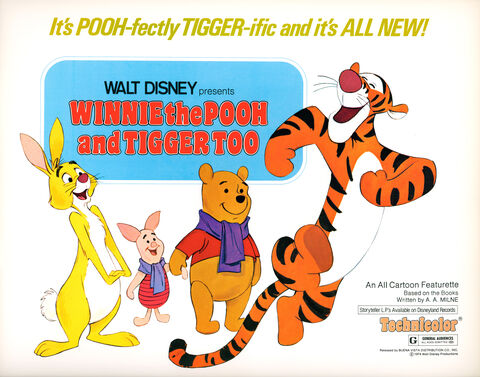
“Walt was concerned that [the Pooh characters] would have more charm than substance,” animator and Disney Legend Frank Thomas would recall, “and he wanted to be sure that we captured the story, that we captured the strength in the characters so that they would exist on their own, [and] they didn’t rely on you having read the story.” Honey Tree, along with its successors Winnie the Pooh and the Blustery Day (1968) and Winnie the Pooh and Tigger Too (1974) are richly evocative of the books while taking all sorts of liberties, not least of which is the introduction of an entirely new character with a distinctly American sensibility, Gopher. And their original, shorter run times allow viewers to take momentary dips into this enchanted, innocent world before leaving again all too soon. It’s a defining strength of the short film: to leave them wanting more.
As Stephen J. Anderson and Don Hall worked to adapt the Pooh stories as a longer animated feature decades later, they still took Walt’s lessons to heart. “You have these amazing characters that Milne and then the Disney artists in Walt’s time created,” Anderson explains, “so give them the stage and get out of their way. Set a beautiful table for them. Don’t put yourselves as filmmakers in between the audience and those characters. Some stories do want more context with camera, lighting, color, and other elements to add more drama. But less is definitely more with Winnie the Pooh (2011). You come to see those characters as warm, charming, silly, and sometimes a little naive.”
Literary Adventures
One aspect that Anderson and Hall specifically carried over from Walt’s Pooh adaptations into their film was the literary framing device, in which the text of Milne’s books becomes a literal setting. “So many Disney animated movies open with a storybook, but none of them continue that conceit throughout the entire film,” notes Anderson. “It’s a signature aspect of Pooh, including the endpapers coming to life with the map of the Hundred Hundred-Acre Wood. One of my sharpest memories of seeing the original shorts as a child was Pooh walking across the letters.”
As one of the most distinctive creative choices made by Walt and his animation team, the framing device fittingly captures what it’s like to read Milne’s stories. The text on the books’ pages is often playfully integrated with Ernest H. Shepard’s landmark illustrations, accentuating moments of humor and whimsy. Shepherd’s loose, cross-hatched drawings can feel like animation key poses in their own right, such as the twisting and tangled proportions of poor Eeyore the donkey as he realizes his tail is missing. Rarely in Walt’s era does one see the animation team taking such a strong lead from their source material.
“It was delightful because it made something come out of a book,” explained Honey Tree and Blustery Day director and Disney Legend Wolfgang “Woolie” Reitherman. “And the thing you have to realize is that that book has been in a great many languages all over the world, and there were millions of people that knew that book. It seemed so great and charming to have a page turned, and you could put little gags in there like turning the pages back and forward, and Sebastian Cabot as the narrator actually helping out Pooh by turning the book. Those three pictures were just gentle material and were a challenge because we even tried to follow the dialogue and the original drawings by Shepard!”
IMG_0947.JPG
IMG_0948.JPG
IMG_0949.JPG
IMG_0950.JPG
IMG_0951.JPG
A Sense of Place
A number of Walt’s leading animators, including Disney Legends Frank Thomas, Ollie Johnston, and Milt Kahl had been avid readers of Milne’s writings for years by the time they came to work on the Disney animated versions. “Some of us could quote whole pages of dialogue by heart,” Johnston commented. Acting as sort of visual translators, the animators, along with layout and background artists like Don Griffith, Al Dempster, and Art Riley, would work entirely from Milne and Shepard’s examples in depicting the Hundred-Acre Wood and its denizens. The result is a rich blend of what Anderson describes as “that classic Disney Xerox look and the pen-and-ink, quick-sketch feel of Shepard’s illustrations.”
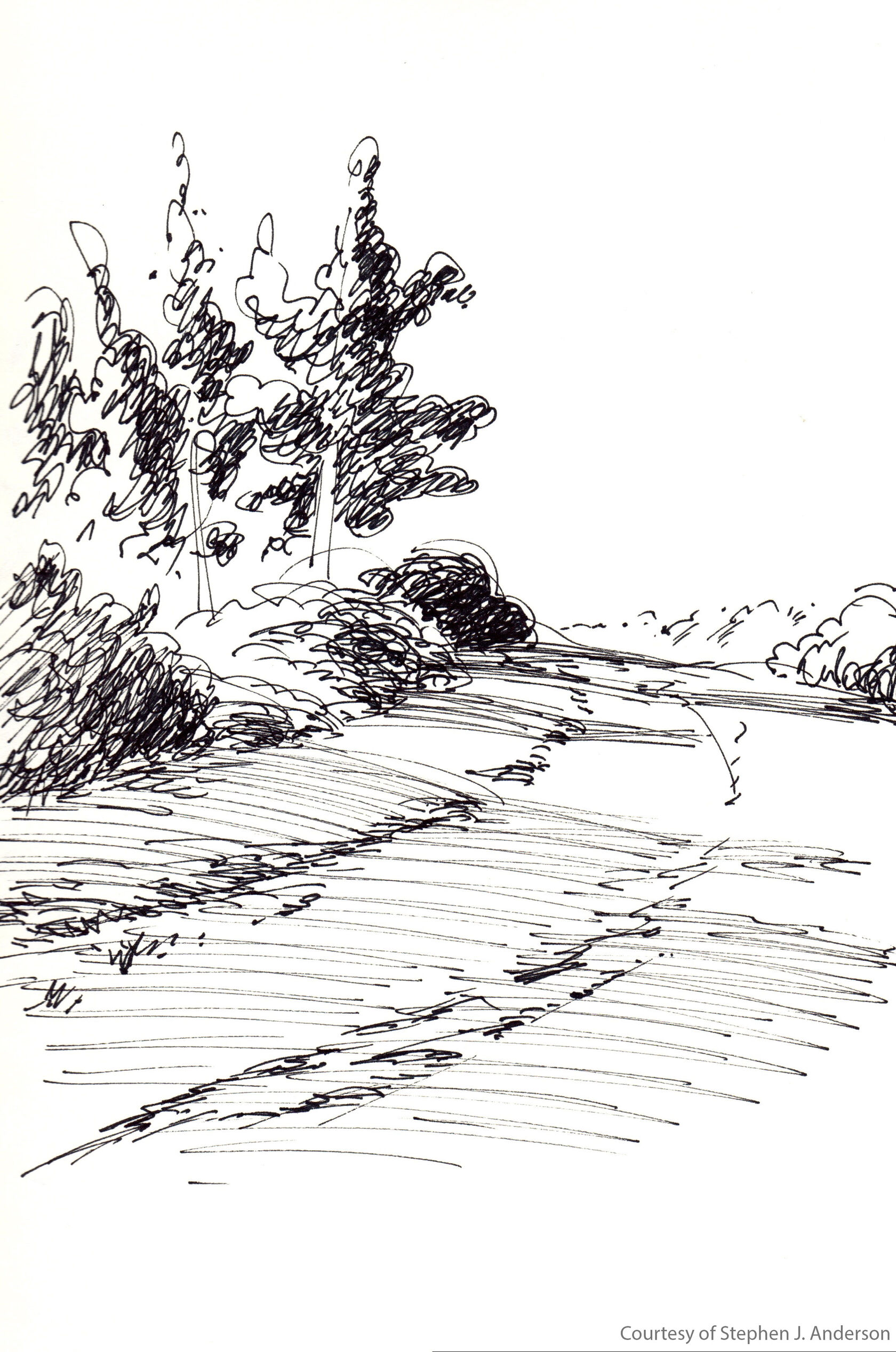
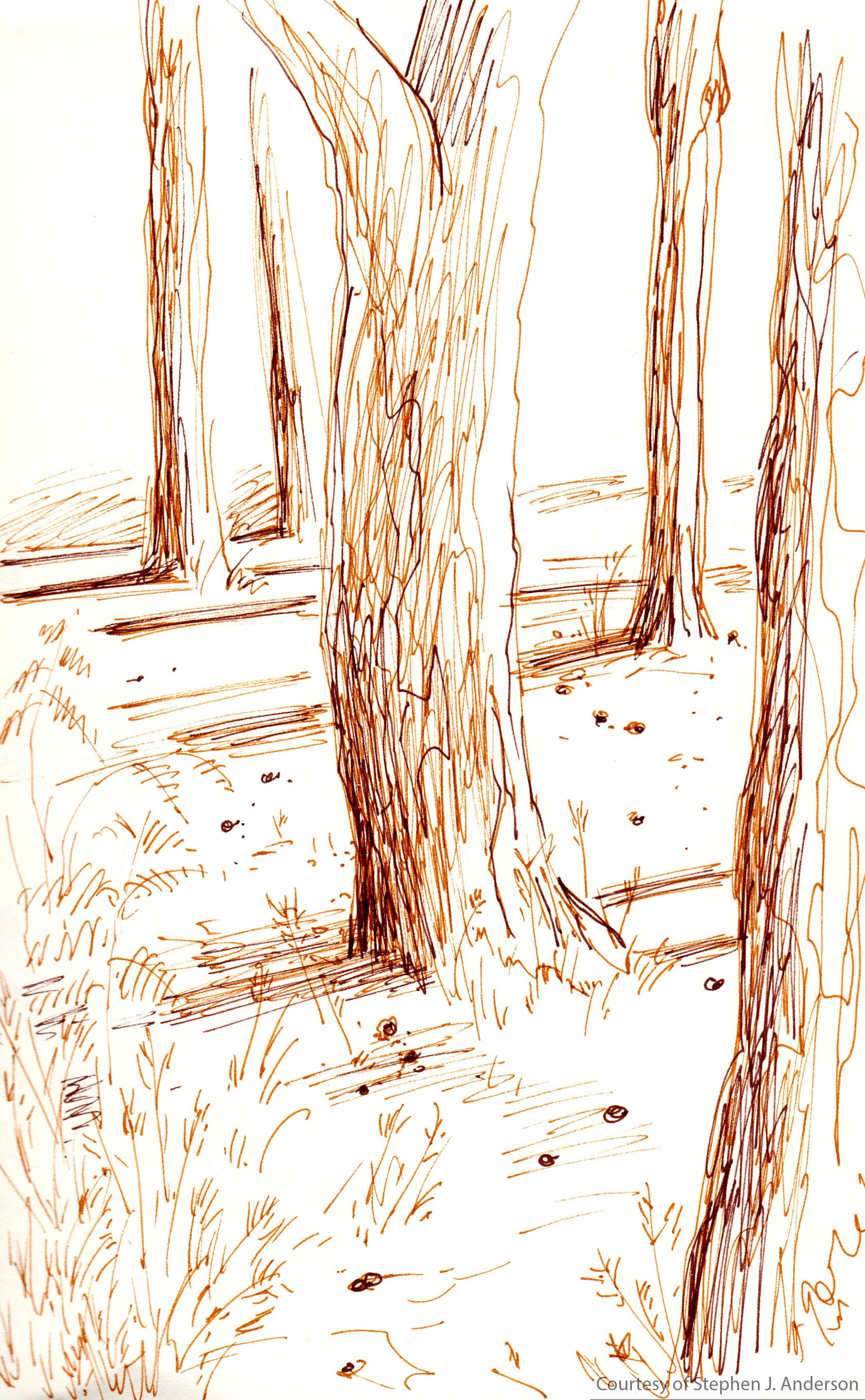
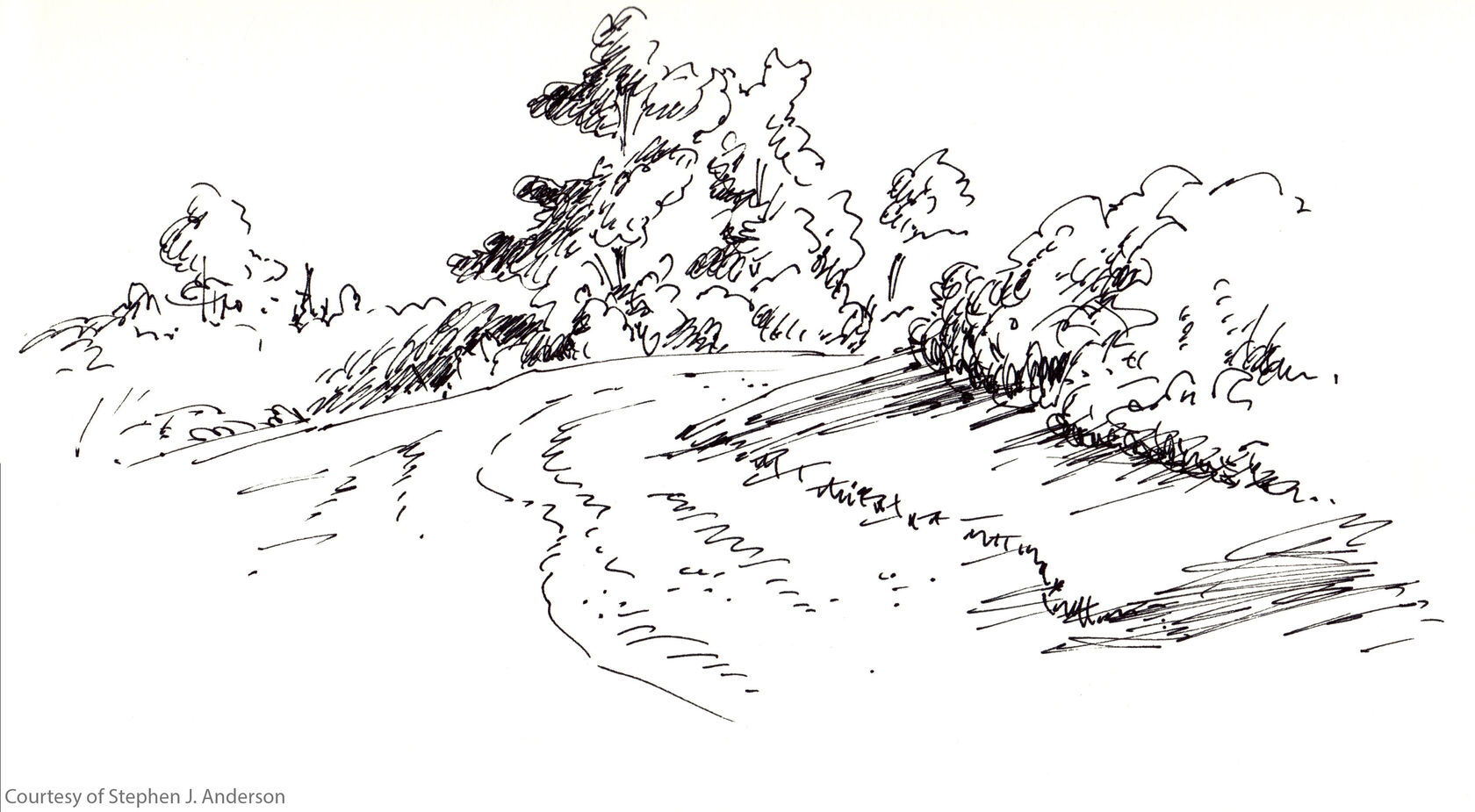
In Walt’s time, research for Disney animated films was centered mostly in the studio’s reference library, along with the occasional visit to a local zoo to study animal anatomy. It was only in later decades that research trips to worldwide locations became standard practice. For 2011’s Winnie the Pooh, Anderson and his colleagues had the unprecedented opportunity to go much deeper into the source material, something Walt’s artists could have only dreamed of. During a 2009 research trip to England, they visited the Victoria and Albert Museum in London, where they were able to view Shepard’s original drawings and sketches in person. “It was unbelievable to see them,” Anderson comments.
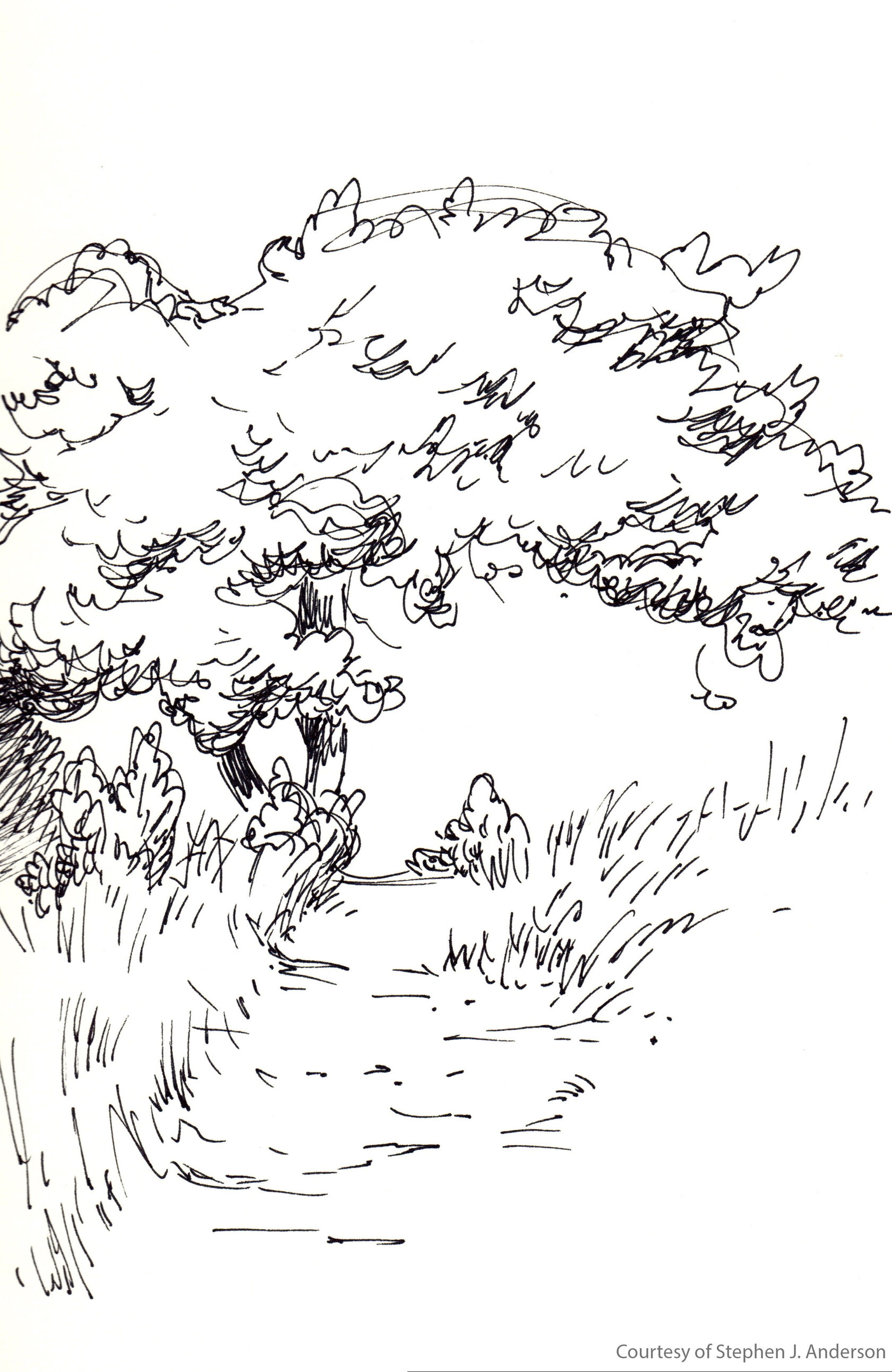
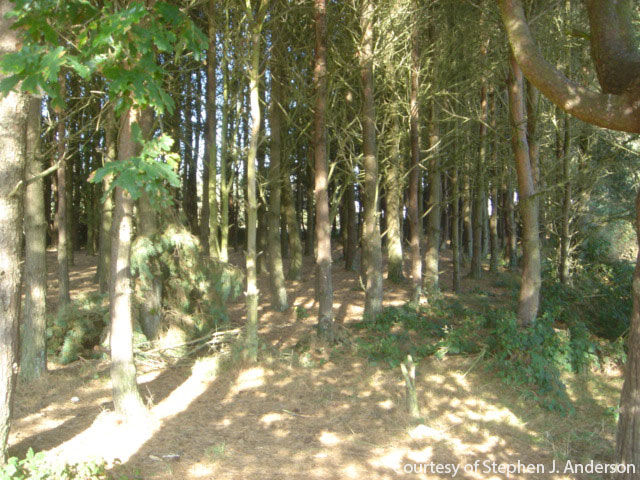
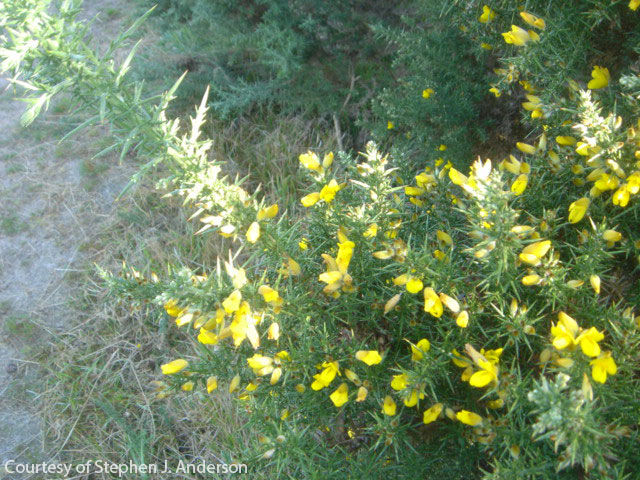
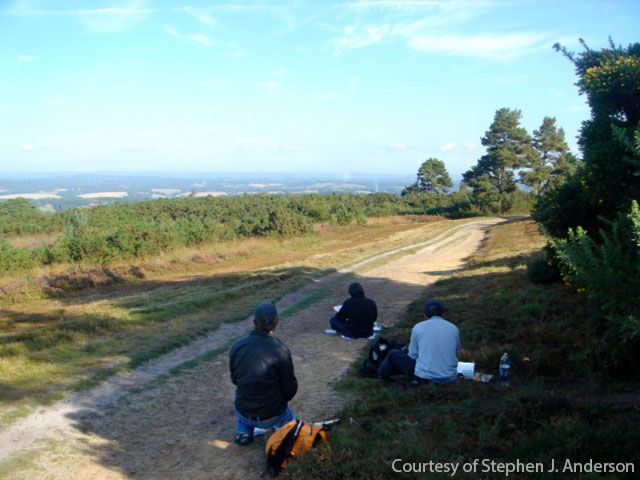
The 21st century team also made a special pilgrimage to Ashdown Forest itself, the real-world counterpart of the Hundred-Acre Wood. Mike Ridley, a Pooh expert and former owner of the Pooh Corner tearoom in nearby Hartfield, served as their guide through the forests and heathlands. “He pointed out all these different spots, such as the inspiration for the Heffalump Trap or Eeyore’s Gloomy Place,” says Anderson. “We sketched and painted and had a really fun time.”
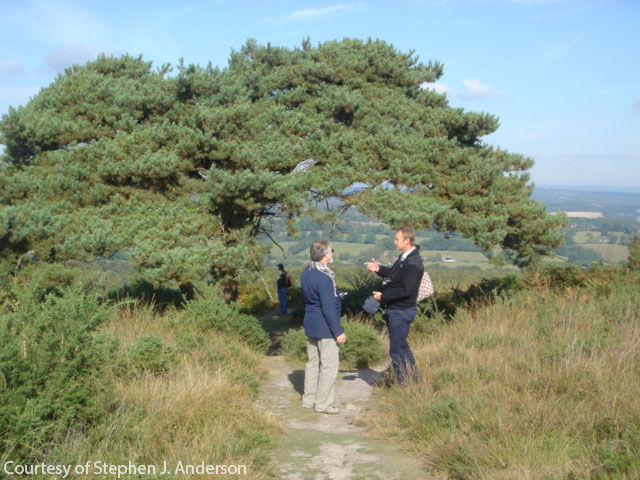
A former medieval hunting ground, the topography of Ashdown Forest may be surprising to many American visitors. “There are more expansive fields than we expected, with gorse and thistle bushes and heather everywhere,” notes Anderson. “We thought it was going to be denser with trees. It’s a beautifully distinct place. There’s one spot that was apparently used for the Heffalump Trap, with a tree that arcs around it in a beautiful way. That became the tree we used at the end of our movie when Christopher Robin and Pooh walk off into the sunset.”
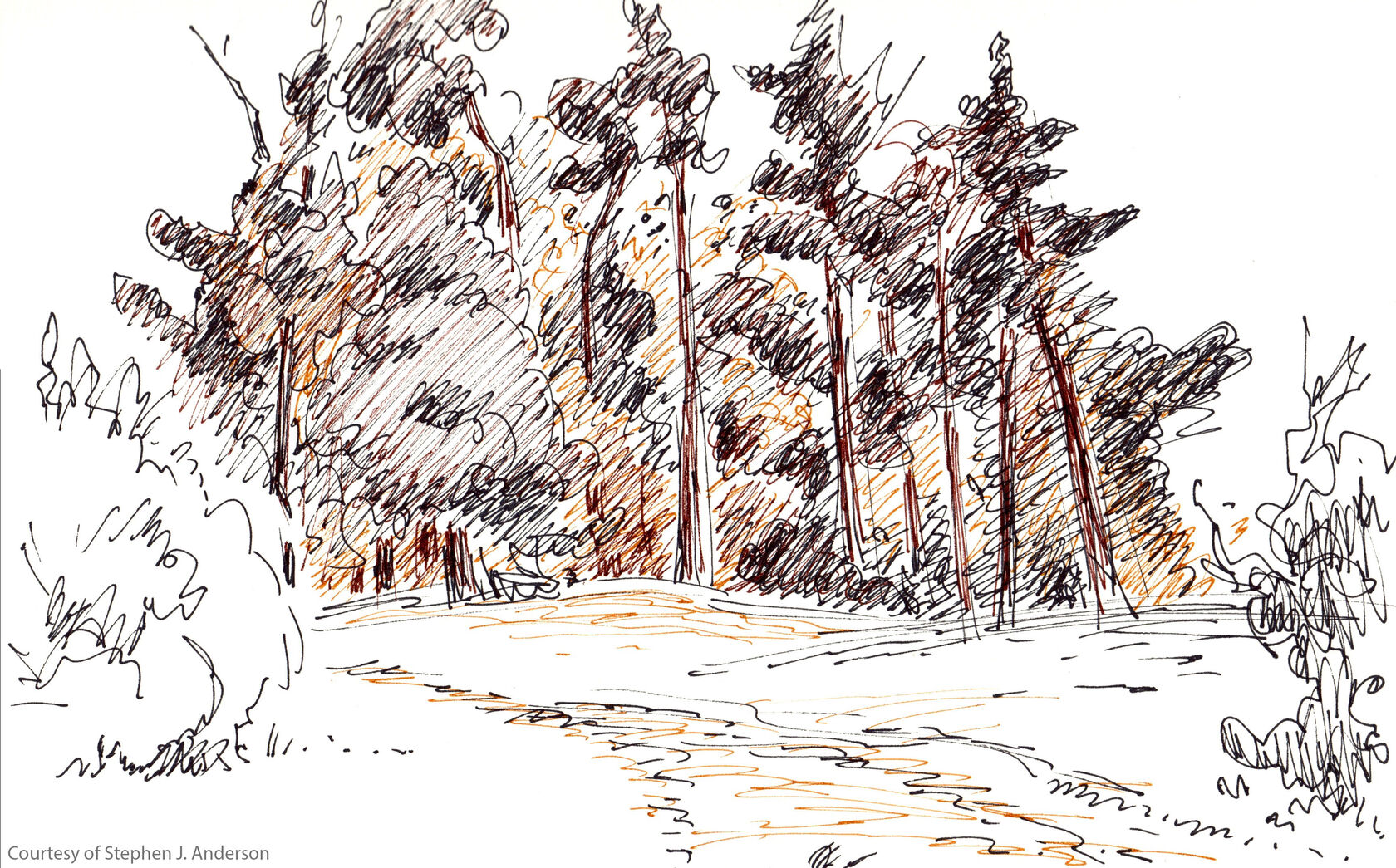
Among Anderson’s favorite spots was Gill’s Lap, a small gathering of pine trees on a hilltop that overlooks much of the surrounding area, which the filmmaker describes as “like entering another dimension.” Known as Galleons Lap in Milne’s text, it serves as the story’s final location, where Christopher Robin and Pooh discuss the merits of “doing Nothing,” marking a sort of farewell as Christopher admits that he must go away to school. A version of this scene was later adapted by a mix of Walt’s veteran artists and an up-and-coming generation for 1977’s The Many Adventures of Winnie the Pooh, a feature-length compilation of the three original featurettes.
DSC06196.JPG
DSC06201.JPG
DSC06221.JPG
DSC06225.JPG
A Legacy That Reverberates Across the Decades
In Walt Disney’s final years, the renowned storyteller seemed to enter his prime. The classic Disney entertainment of charm, humor, and excitement continued to thrive, but with his creative leadership, Walt also brought quiet sublimity to stories like Mary Poppins (1964) with its lessons in grace, love, humility, and joy. While working on the Pooh stories with the animation team, Walt was simultaneously advising them on story development for The Jungle Book (1967), which—not unlike the Pooh shorts—would feature a remarkably concise and focused storyline. Throughout all of it is a certain matured sense of whimsy that could be a reflection of Walt’s accumulated experience.
Ironically, to achieve simplicity in art often requires the greatest investment of complex planning and iteration. The creation of the childlike, almost sagely Winnie the Pooh as a character required the complex blend of a son’s innocent wonder and his father’s practiced imagination. The result is the sort of “do Nothing” poetry that Walt and his artists were able to so effectively capture in their adaptations. Could they have done so as effectively back in 1938? Was the long delay in acquiring the screen rights a certain blessing in disguise?
“As we get older, it becomes harder and harder to do nothing in this profound and therapeutic sense,” writes Christopher Finch. “The Pooh books and films remind us of what doing nothing feels like and how much fun it can be. They also permit us to reinvent the tools that are required while doing nothing, tools such as creative indecision, vigorous hesitation, zestful indolence, and passionate inertia."
The lessons in creating stories like those with Pooh and his friends have reverberated through multiple generations at The Walt Disney Studios. One of Stephen J. Anderson’s main collaborators on 2011’s Winnie the Pooh was senior art director Burny Mattinson, a Disney employee since 1953 who had worked on two of the original featurettes. “I remember a moment sitting in the story room with Don and the team,” Anderson recalls. “Burny was to my right, and on the left we had a story team of about five artists, and all of them had come out of the training program somewhat recently. For many, Pooh was their first movie. We had this fresh talent, and we had Burny and all of his experience. Don and I were somewhere in the middle. It was a really cool moment to think about how this project was a bridge or an intersection of classic Disney and the newest Disney there in the room. The whole movie was like that. We were making something new, but we were borrowing from the classics—both Milne and Disney. It was such a cool blending of points of view and generations.”
That intersection was commemorated in a small but meaningful gesture on the part of Mattinson, who had been waiting since Walt’s time to dust off a very special would-be movie prop. “One day, Burny called us to his office and he had this little stuffed Winnie the Pooh with him,” says Anderson. “He explained that his wife Sylvia—who had been a clean-up artist at the studio—had actually made it years earlier. During work on Honey Tree, Woolie Reitherman wanted to do a live-action opening, so he walked around the studio saying, ‘If anyone makes—or knows someone who makes—plush animals, we need a plush Winnie the Pooh for this opening. Burny heard this and told Sylvia, who could sew. She made this Pooh and when Burny took it into Woolie, he said, ‘I’m so sorry, but we already got one from somebody else, so we can’t use yours.’ Burny took it back home, his kids played it with it, and then it went up into the attic. He told us, ‘I thought I’d just show you guys.’ And that’s the Winnie the Pooh that is in our live-action opening. We had to use that.”
“So they went off together,” writes A.A. Milne in the final lines of The House at Pooh Corner. “But wherever they go, and whatever happens to them on the way, in that enchanted place on the top of the Forest, a little boy and his Bear will always be playing.” In the 1977 Disney feature compilation, Walt’s veteran artists made a poignant alteration to the final clause, “in that enchanted place at the top of the Forest, a little bear will always be waiting.” In all our hearts and imaginations, Pooh is there waiting for us. And with the contributions of Walt Disney and the artists who have continued his legacy, we can always go back for another adventure. There is truly nothing else like it in the Disney canon.

–Lucas O. Seastrom
Lucas O. Seastrom is a writer, filmmaker, and contracting historian for The Walt Disney Family Museum.
Image sources (listed in order of appearance):
- Poster - Winnie the Pooh and the Honey Tree, 1966; collection of the Walt Disney Family Foundation, gift of Dean Barickman; © 1965 Disney
- Lobby card - Rabbit, Piglet, Pooh and Tigger, Winnie the Pooh and Tigger Too!, 1974; collection of the Walt Disney Family Foundation, gift of Dean Barickman; © 1974 Disney
- Anderson, Stephen J.; Inspirational sketches from research trip for Disney Animation’s Winnie the Pooh (2011); courtesy of Stephen J. Anderson
- Photographs - Stephen J. Anderson and group on research trip for Disney Animation’s Winnie the Pooh (2011); courtesy of Stephen J. Anderson